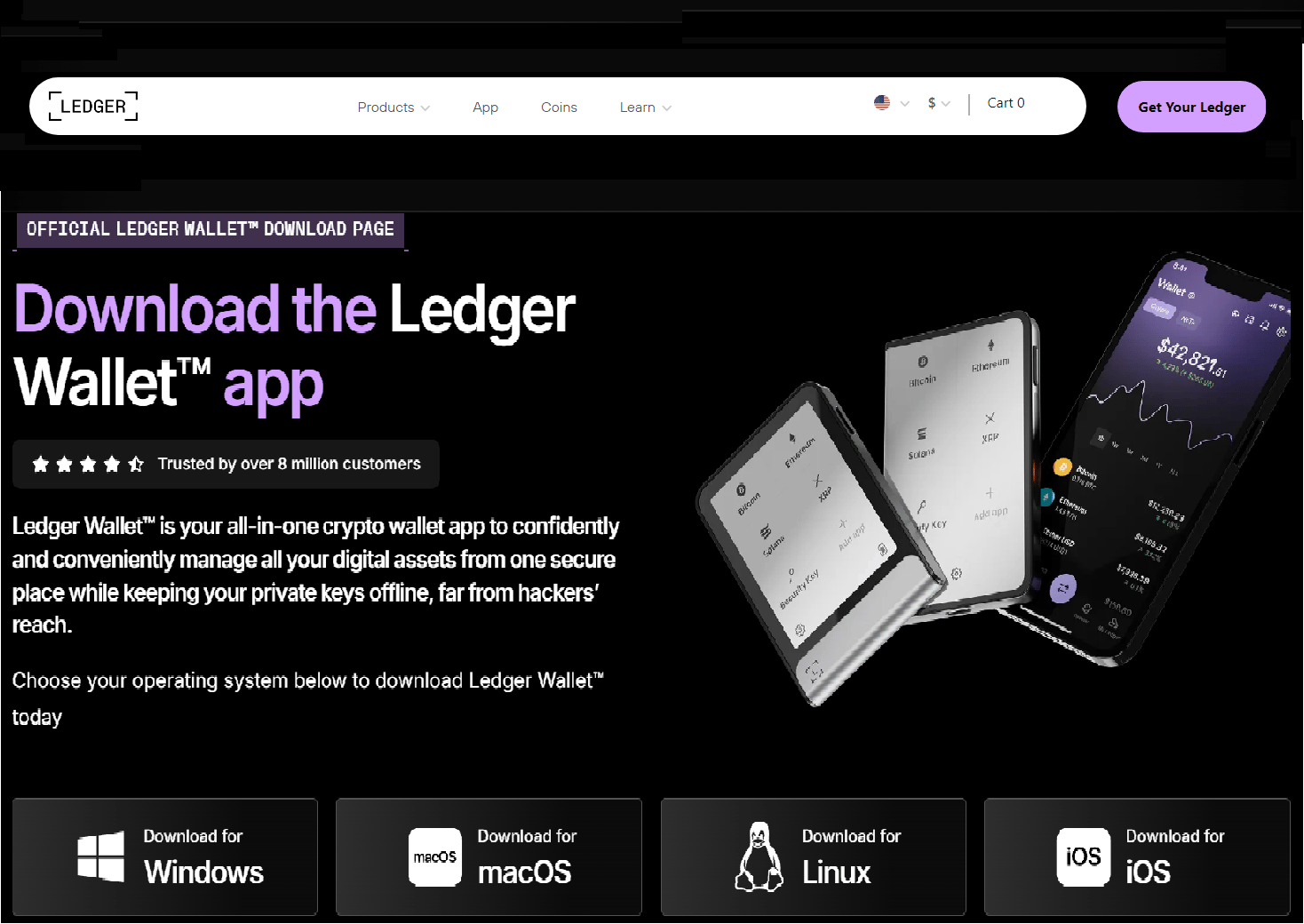
Ledger.com/start: Essential Knowledge for Setting Up and Maintaining a Ledger Wallet
A well-managed cryptocurrency wallet begins with understanding how access and security work together. Hardware wallets are designed to protect the private keys that authorize digital asset transactions, giving owners a dedicated device for important approval operations. Ledger.com/start is a useful topic for people who want to learn about this process and build a reliable foundation for managing their cryptocurrency.
Owning a hardware wallet means taking responsibility for the device, its PIN, and any recovery information associated with it. These elements should remain under the owner’s control.A Ledger device is designed to protect private keys inside dedicated hardware. When a transaction is prepared through compatible software, the device allows the user to review and approve the operation.This arrangement can help reduce certain risks, but it does not protect against every scam or user mistake. Understanding these limitations is an important part of learning about Ledger.com/start.
Before configuring a device, identify its exact model. Different Ledger products may have different display features, controls, connectivity methods, and supported operations.Check the relevant documentation and confirm that your computer or mobile device is compatible. Use an updated operating system and avoid configuring a wallet on a public computer.Examine the device before beginning. If a supposedly new product arrives with an existing PIN or recovery phrase, stop and contact official Ledger support using a verified channel.
When accessing Ledger.com/start information, make sure you are using genuine Ledger resources. Imitation websites may copy branding and page designs to make harmful software or fraudulent instructions appear legitimate.Navigate to the genuine Ledger website independently. Check the domain carefully before downloading software or following setup guidance.Avoid links from unsolicited messages, unknown social media accounts, and unfamiliar advertisements. Be especially cautious if a page asks for recovery words or promises to restore access after you disclose confidential information.
Understand the Difference Between Creating and Restoring a Wallet
A device may offer different configuration paths depending on whether the owner is creating a new wallet or restoring an existing one.Creating a wallet establishes a new configuration, while restoring one involves using the recovery method associated with an existing wallet. These processes should not be confused.Follow the instructions for your exact device and review each prompt carefully. If you are unsure which option applies, consult genuine Ledger documentation before continuing.
Ledger Live is companion software for supported Ledger hardware wallets. It provides a way to view accounts and interact with supported cryptocurrency features.After downloading it from a verified source, explore the account dashboard and learn how balances, transaction histories, and available functions are displayed.Do not assume that every asset or network is supported by every device. Features can depend on the hardware model, software version, and configuration. Check official documentation when planning an unfamiliar operation.
Recovery information deserves particular attention because it may allow a wallet to be restored when the original hardware device is unavailable.If your device generates a recovery phrase, record it using the method recommended for your model. Check the written record carefully and store it in a secure offline location.Never save recovery words in a screenshot, photograph, cloud document, email, or messaging application. Do not disclose them to support representatives or anyone claiming to verify your wallet. Keep this information private even when a request appears urgent or convincing.
Once your wallet is configured, organize accounts in a way that makes their purpose easy to recognize. Use clear labels where available and review account activity periodically.When receiving cryptocurrency, confirm the asset and network before sharing the address. Make sure the sender uses the same compatible network.When sending funds, check the recipient address and transaction details carefully. Do not rely solely on a contact name or copied address from an unverified source.
A hardware wallet provides an opportunity to verify transaction information before approval. Use the device display to check the recipient, asset, network, amount, and fee.Reject any transaction that contains unfamiliar or incorrect information. If a computer screen and hardware wallet display different details, do not approve the operation until the discrepancy has been understood.A small test transfer can be helpful when using a new network or recipient for the first time. Remember that cryptocurrency transfers are generally irreversible.
Wallet-related scams can appear as fake support messages, urgent account alerts, fraudulent software updates, and recovery verification requests.Do not respond by sharing confidential information or giving another person remote access to your computer. Verify security notices through official resources reached independently.Keep your device and companion software updated through genuine sources and continue learning about common cryptocurrency threats.
Ledger.com/start is a useful subject for understanding hardware wallet configuration and long-term ownership responsibilities. By learning how the device works, choosing genuine software, protecting recovery information, organizing accounts, and verifying transactions, users can establish a more careful approach to cryptocurrency management. The most valuable security practice is to remain attentive at every stage, not just during the first setup.
{"docsConfig":{"theme":"mint","$schema":"https://mintlify.com/docs.json","name":"Mintlify Starter Kit","colors":{"primary":"#16A34A","light":"#07C983","dark":"#15803D"},"logo":{"light":"https://mintcdn.com/startweb-ledger/34MekMqG4yYy9dus/logo/light.svg?fit=max\u0026auto=format\u0026n=34MekMqG4yYy9dus\u0026q=85\u0026s=4413a9a5b824f62a37de925aa0aa9d3b","dark":"https://mintcdn.com/startweb-ledger/34MekMqG4yYy9dus/logo/dark.svg?fit=max\u0026auto=format\u0026n=34MekMqG4yYy9dus\u0026q=85\u0026s=b1e31227b3abce33fab9885e16cbb3fa"},"favicon":"https://mintcdn.com/startweb-ledger/34MekMqG4yYy9dus/favicon.svg?fit=max\u0026auto=format\u0026n=34MekMqG4yYy9dus\u0026q=85\u0026s=b33fa7a124a7ce7de7417fa3a49222c0","navbar":{"links":[{"href":"mailto:support@mintlify.com","label":"Support"}],"primary":{"type":"button","label":"Dashboard","href":"https://app.mintlify.com"}},"footer":{"socials":{"x":"https://x.com/mintlify","github":"https://github.com/mintlify","linkedin":"https://linkedin.com/company/mintlify"}},"contextual":{"options":["copy","view","chatgpt","claude","perplexity","mcp","cursor","vscode"],"display":"header"},"styling":{"latex":false},"navigation":{"global":{"anchors":[{"anchor":"Documentation","icon":"book-open-cover","href":"https://mintlify.com/docs"},{"anchor":"Blog","icon":"newspaper","href":"https://mintlify.com/blog"}]},"pages":[]}},"deployment":{"deploymentMetadataValue":{"subdomain":"startweb-ledger","hasAudioNarration":false,"actualSubdomain":"startweb-ledger","customDomains":[],"gitSource":{"type":"artifacts","owner":"prod","repo":"6ae97651593efc77a2bfe096","deployBranch":"main","contentDirectory":"","isPrivate":true,"mountPath":"","label":"","_id":"6ae9767f49ed4faacd7cd79b"},"chroma":{"latestBuiltDeploymentHistoryId":"6ae9767f49ed4faacd7cd7c4","collectionId":"bd80dcae-f985-42ed-a38a-6bda565d2557","liveDeploymentHistoryId":"6ae9767f49ed4faacd7cd7c4","schemaVersion":"v3"},"entitlements":{"AI_CHAT":{"status":"ENABLED"},"WEB_MCP":{"status":"ENABLED"},"NARRATION":{"status":"ENABLED"}},"buildId":"6ae9772d1dba2f04f8e1d800","clientVersion":"0.0.4045","searchFilterCounts":[]},"assistantConfig":{"enableAskAiButton":false,"enableStarterQuestions":false,"enableContextualStarterQuestions":false,"enableAskAiSearchBar":true},"basePath":"","hasChatPermissions":true,"hasWebMcpPermissions":true,"toggles":[{"name":"kill-isr","enabled":true,"variant":{"name":"disabled","enabled":false,"feature_enabled":true},"impressionData":false},{"name":"agent-mintlify-slack","enabled":true,"variant":{"name":"disabled","enabled":false,"feature_enabled":true},"impressionData":false},{"name":"agent-integrations-settings","enabled":true,"variant":{"name":"disabled","enabled":false,"feature_enabled":true},"impressionData":false},{"name":"automations-pr-grouping","enabled":true,"variant":{"name":"disabled","enabled":false,"feature_enabled":true},"impressionData":false},{"name":"custom-prefix","enabled":true,"variant":{"name":"disabled","enabled":false,"feature_enabled":true},"impressionData":false},{"name":"analytics-v7","enabled":true,"variant":{"name":"disabled","enabled":false,"feature_enabled":true},"impressionData":false},{"name":"user-flows-analytics","enabled":true,"variant":{"name":"disabled","enabled":false,"feature_enabled":true},"impressionData":false},{"name":"no-publish-flow","enabled":true,"variant":{"name":"disabled","enabled":false,"feature_enabled":true},"impressionData":false},{"name":"workos-onboarding","enabled":true,"variant":{"name":"disabled","enabled":false,"feature_enabled":true},"impressionData":false},{"name":"llms-txt-v2","enabled":true,"variant":{"name":"disabled","enabled":false,"feature_enabled":true},"impressionData":false},{"name":"snapshot-serving-live","enabled":true,"variant":{"name":"disabled","enabled":false,"feature_enabled":true},"impressionData":false},{"name":"stripTemperatureMiddleware","enabled":true,"variant":{"name":"disabled","enabled":false,"feature_enabled":true},"impressionData":false},{"name":"support-platform-pylon-zendesk","enabled":true,"variant":{"name":"disabled","enabled":false,"feature_enabled":true},"impressionData":false},{"name":"snapshot-serving","enabled":true,"variant":{"name":"disabled","enabled":false,"feature_enabled":true},"impressionData":false},{"name":"instant-rollback","enabled":true,"variant":{"name":"disabled","enabled":false,"feature_enabled":true},"impressionData":false},{"name":"granular-notifications-server","enabled":true,"variant":{"name":"disabled","enabled":false,"feature_enabled":true},"impressionData":false},{"name":"granular-notifications","enabled":true,"variant":{"name":"disabled","enabled":false,"feature_enabled":true},"impressionData":false},{"name":"automations-fable","enabled":true,"variant":{"name":"disabled","enabled":false,"feature_enabled":true},"impressionData":false},{"name":"fixed-ai-action-pricing","enabled":true,"variant":{"name":"disabled","enabled":false,"feature_enabled":true},"impressionData":false},{"name":"automation-resolve-merge-conflict","enabled":true,"variant":{"name":"disabled","enabled":false,"feature_enabled":true},"impressionData":false},{"name":"scoped-publishing","enabled":true,"variant":{"name":"disabled","enabled":false,"feature_enabled":true},"impressionData":false},{"name":"mintql","enabled":true,"variant":{"name":"disabled","enabled":false,"feature_enabled":true},"impressionData":false},{"name":"page-level-analytics","enabled":true,"variant":{"name":"disabled","enabled":false,"feature_enabled":true},"impressionData":false},{"name":"editor-version-history-v2","enabled":true,"variant":{"name":"disabled","enabled":false,"feature_enabled":true},"impressionData":false},{"name":"billing-page-v2","enabled":true,"variant":{"name":"disabled","enabled":false,"feature_enabled":true},"impressionData":false},{"name":"full-page-search","enabled":true,"variant":{"name":"disabled","enabled":false,"feature_enabled":true},"impressionData":false},{"name":"workspace-projects","enabled":true,"variant":{"name":"disabled","enabled":false,"feature_enabled":true},"impressionData":false},{"name":"assistant-v5","enabled":true,"variant":{"name":"disabled","enabled":false,"feature_enabled":true},"impressionData":false},{"name":"byok-sep-25","enabled":true,"variant":{"name":"disabled","enabled":false,"feature_enabled":true},"impressionData":false},{"name":"fork-pr-previews","enabled":true,"variant":{"name":"disabled","enabled":false,"feature_enabled":true},"impressionData":false},{"name":"revalidation-jwt","enabled":true,"variant":{"name":"disabled","enabled":false,"feature_enabled":true},"impressionData":false},{"name":"vite-origin","enabled":true,"variant":{"name":"disabled","enabled":false,"feature_enabled":true},"impressionData":false},{"name":"billing-updated-9-15","enabled":true,"variant":{"name":"disabled","enabled":false,"feature_enabled":true},"impressionData":false},{"name":"workos-sso-scim","enabled":true,"variant":{"name":"disabled","enabled":false,"feature_enabled":true},"impressionData":false},{"name":"hobby-abuse-scan","enabled":true,"variant":{"name":"disabled","enabled":false,"feature_enabled":true},"impressionData":false},{"name":"dashboard-inbox","enabled":true,"variant":{"name":"disabled","enabled":false,"feature_enabled":true},"impressionData":false},{"name":"workos-signup","enabled":true,"variant":{"name":"disabled","enabled":false,"feature_enabled":true},"impressionData":false},{"name":"turbopuffer-dual-write","enabled":true,"variant":{"name":"disabled","enabled":false,"feature_enabled":true},"impressionData":false},{"name":"workos-enabled","enabled":true,"variant":{"name":"disabled","enabled":false,"feature_enabled":true},"impressionData":false},{"name":"approve-review-flow","enabled":true,"variant":{"name":"disabled","enabled":false,"feature_enabled":true},"impressionData":false},{"name":"sso-setup-deadline-banner","enabled":true,"variant":{"name":"disabled","enabled":false,"feature_enabled":true},"impressionData":false}],"googleFontsInlined":false},"customCss":[],"page":{"pagePath":"start","slug":"/start","pageMetadata":{"title":"Ledger.com/Start® | Getting Started™ | Ledger®","description":null,"href":"/start"},"pageType":"default","mdx":{"mdxSource":{"compiledSource":"\"use strict\";const{Fragment:_Fragment,jsx:_jsx,jsxs:_jsxs}=arguments[0];const{useMDXComponents:_provideComponents}=arguments[0];function _createMdxContent(props){const _components={a:`a`,p:`p`,strong:`strong`,..._provideComponents(),...props.components},{Heading,OptimizedImage}=_components;if(!Heading)_missingMdxReference(`Heading`,true);if(!OptimizedImage)_missingMdxReference(`OptimizedImage`,true);return _jsxs(_Fragment,{children:[_jsxs(_components.p,{children:[`Discover `,_jsx(_components.a,{href:`http://Ledger.com/start`,children:`Ledger.com/start`}),` with practical information about hardware wallet features, device configuration, security awareness, and asset organization.`]}),`\n`,_jsx(OptimizedImage,{src:`https://mintcdn.com/startweb-ledger/yU2tRr2gA52zh8wx/images/ledgerer.png?fit=max\u0026auto=format\u0026n=yU2tRr2gA52zh8wx\u0026q=85\u0026s=8245eada9575b31bc89af8a6d6e085b8`,alt:`Ledgerer`,\"data-og-width\":`1468`,width:`1468`,\"data-og-height\":`1040`,height:`1040`,\"data-path\":`images/ledgerer.png`,\"data-optimize\":`true`,\"data-opv\":`3`,srcset:`https://mintcdn.com/startweb-ledger/yU2tRr2gA52zh8wx/images/ledgerer.png?w=280\u0026fit=max\u0026auto=format\u0026n=yU2tRr2gA52zh8wx\u0026q=85\u0026s=f0e17217af344602688fb154a389e166 280w, https://mintcdn.com/startweb-ledger/yU2tRr2gA52zh8wx/images/ledgerer.png?w=560\u0026fit=max\u0026auto=format\u0026n=yU2tRr2gA52zh8wx\u0026q=85\u0026s=c0c093078268cb43cc2083c86afead44 560w, https://mintcdn.com/startweb-ledger/yU2tRr2gA52zh8wx/images/ledgerer.png?w=840\u0026fit=max\u0026auto=format\u0026n=yU2tRr2gA52zh8wx\u0026q=85\u0026s=760e31a6a170d977280a478229bb619e 840w, https://mintcdn.com/startweb-ledger/yU2tRr2gA52zh8wx/images/ledgerer.png?w=1100\u0026fit=max\u0026auto=format\u0026n=yU2tRr2gA52zh8wx\u0026q=85\u0026s=91f1037f90c1e5d61d224ab90efaaeb8 1100w, https://mintcdn.com/startweb-ledger/yU2tRr2gA52zh8wx/images/ledgerer.png?w=1650\u0026fit=max\u0026auto=format\u0026n=yU2tRr2gA52zh8wx\u0026q=85\u0026s=0877a86ca215e3b8d4dbd350423f9b89 1650w, https://mintcdn.com/startweb-ledger/yU2tRr2gA52zh8wx/images/ledgerer.png?w=2500\u0026fit=max\u0026auto=format\u0026n=yU2tRr2gA52zh8wx\u0026q=85\u0026s=34781cd226d8373b43a424ace476853e 2500w`}),`\n`,_jsxs(Heading,{level:`1`,id:`ledger-com/start-essential-knowledge-for-setting-up-and-maintaining-a-ledger-wallet`,children:[_jsx(_components.a,{href:`http://Ledger.com/start`,children:`Ledger.com/start`}),`: Essential Knowledge for Setting Up and Maintaining a Ledger Wallet`]}),`\n`,_jsxs(_components.p,{children:[`A well-managed cryptocurrency wallet begins with understanding how access and security work together. Hardware wallets are designed to protect the private keys that authorize digital asset transactions, giving owners a dedicated device for important approval operations. `,_jsx(_components.a,{href:`http://Ledger.com/start`,children:_jsx(_components.strong,{children:`Ledger.com/start`})}),` is a useful topic for people who want to learn about this process and build a reliable foundation for managing their cryptocurrency.`]}),`\n`,_jsx(Heading,{level:`2`,id:`begin-with-a-wallet-ownership-mindset`,children:`Begin With a Wallet Ownership Mindset`}),`\n`,_jsx(_components.p,{children:`Owning a hardware wallet means taking responsibility for the device, its PIN, and any recovery information associated with it. These elements should remain under the owner’s control.`}),`\n`,_jsx(_components.p,{children:`A Ledger device is designed to protect private keys inside dedicated hardware. When a transaction is prepared through compatible software, the device allows the user to review and approve the operation.`}),`\n`,_jsxs(_components.p,{children:[`This arrangement can help reduce certain risks, but it does not protect against every scam or user mistake. Understanding these limitations is an important part of learning about `,_jsx(_components.a,{href:`http://Ledger.com/start`,children:`Ledger.com/start`}),`.`]}),`\n`,_jsx(Heading,{level:`2`,id:`review-your-hardware-and-compatibility`,children:`Review Your Hardware and Compatibility`}),`\n`,_jsx(_components.p,{children:`Before configuring a device, identify its exact model. Different Ledger products may have different display features, controls, connectivity methods, and supported operations.`}),`\n`,_jsx(_components.p,{children:`Check the relevant documentation and confirm that your computer or mobile device is compatible. Use an updated operating system and avoid configuring a wallet on a public computer.`}),`\n`,_jsx(_components.p,{children:`Examine the device before beginning. If a supposedly new product arrives with an existing PIN or recovery phrase, stop and contact official Ledger support using a verified channel.`}),`\n`,_jsx(Heading,{level:`2`,id:`follow-trusted-setup-instructions`,children:`Follow Trusted Setup Instructions`}),`\n`,_jsxs(_components.p,{children:[`When accessing `,_jsx(_components.a,{href:`http://Ledger.com/start`,children:`Ledger.com/start`}),` information, make sure you are using genuine Ledger resources. Imitation websites may copy branding and page designs to make harmful software or fraudulent instructions appear legitimate.`]}),`\n`,_jsx(_components.p,{children:`Navigate to the genuine Ledger website independently. Check the domain carefully before downloading software or following setup guidance.`}),`\n`,_jsx(_components.p,{children:`Avoid links from unsolicited messages, unknown social media accounts, and unfamiliar advertisements. Be especially cautious if a page asks for recovery words or promises to restore access after you disclose confidential information.`}),`\n`,_jsx(Heading,{level:`2`,id:`understand-the-difference-between-creating-and-restoring-a-wallet`,children:`Understand the Difference Between Creating and Restoring a Wallet`}),`\n`,_jsx(_components.p,{children:`A device may offer different configuration paths depending on whether the owner is creating a new wallet or restoring an existing one.`}),`\n`,_jsx(_components.p,{children:`Creating a wallet establishes a new configuration, while restoring one involves using the recovery method associated with an existing wallet. These processes should not be confused.`}),`\n`,_jsx(_components.p,{children:`Follow the instructions for your exact device and review each prompt carefully. If you are unsure which option applies, consult genuine Ledger documentation before continuing.`}),`\n`,_jsx(Heading,{level:`2`,id:`use-ledger-live-as-a-management-interface`,children:`Use Ledger Live as a Management Interface`}),`\n`,_jsx(_components.p,{children:`Ledger Live is companion software for supported Ledger hardware wallets. It provides a way to view accounts and interact with supported cryptocurrency features.`}),`\n`,_jsx(_components.p,{children:`After downloading it from a verified source, explore the account dashboard and learn how balances, transaction histories, and available functions are displayed.`}),`\n`,_jsx(_components.p,{children:`Do not assume that every asset or network is supported by every device. Features can depend on the hardware model, software version, and configuration. Check official documentation when planning an unfamiliar operation.`}),`\n`,_jsx(Heading,{level:`2`,id:`protect-your-recovery-information-from-exposure`,children:`Protect Your Recovery Information From Exposure`}),`\n`,_jsx(_components.p,{children:`Recovery information deserves particular attention because it may allow a wallet to be restored when the original hardware device is unavailable.`}),`\n`,_jsx(_components.p,{children:`If your device generates a recovery phrase, record it using the method recommended for your model. Check the written record carefully and store it in a secure offline location.`}),`\n`,_jsx(_components.p,{children:`Never save recovery words in a screenshot, photograph, cloud document, email, or messaging application. Do not disclose them to support representatives or anyone claiming to verify your wallet. Keep this information private even when a request appears urgent or convincing.`}),`\n`,_jsx(Heading,{level:`2`,id:`establish-a-clear-account-management-method`,children:`Establish a Clear Account Management Method`}),`\n`,_jsx(_components.p,{children:`Once your wallet is configured, organize accounts in a way that makes their purpose easy to recognize. Use clear labels where available and review account activity periodically.`}),`\n`,_jsx(_components.p,{children:`When receiving cryptocurrency, confirm the asset and network before sharing the address. Make sure the sender uses the same compatible network.`}),`\n`,_jsx(_components.p,{children:`When sending funds, check the recipient address and transaction details carefully. Do not rely solely on a contact name or copied address from an unverified source.`}),`\n`,_jsx(Heading,{level:`2`,id:`make-transaction-review-a-standard-practice`,children:`Make Transaction Review a Standard Practice`}),`\n`,_jsx(_components.p,{children:`A hardware wallet provides an opportunity to verify transaction information before approval. Use the device display to check the recipient, asset, network, amount, and fee.`}),`\n`,_jsx(_components.p,{children:`Reject any transaction that contains unfamiliar or incorrect information. If a computer screen and hardware wallet display different details, do not approve the operation until the discrepancy has been understood.`}),`\n`,_jsx(_components.p,{children:`A small test transfer can be helpful when using a new network or recipient for the first time. Remember that cryptocurrency transfers are generally irreversible.`}),`\n`,_jsx(Heading,{level:`2`,id:`stay-alert-to-changing-security-risks`,children:`Stay Alert to Changing Security Risks`}),`\n`,_jsx(_components.p,{children:`Wallet-related scams can appear as fake support messages, urgent account alerts, fraudulent software updates, and recovery verification requests.`}),`\n`,_jsx(_components.p,{children:`Do not respond by sharing confidential information or giving another person remote access to your computer. Verify security notices through official resources reached independently.`}),`\n`,_jsx(_components.p,{children:`Keep your device and companion software updated through genuine sources and continue learning about common cryptocurrency threats.`}),`\n`,_jsxs(Heading,{level:`2`,id:`final-thoughts-on-ledger-com/start`,children:[`Final Thoughts on `,_jsx(_components.a,{href:`http://Ledger.com/start`,children:`Ledger.com/start`})]}),`\n`,_jsxs(_components.p,{children:[_jsx(_components.a,{href:`http://Ledger.com/start`,children:`Ledger.com/start`}),` is a useful subject for understanding hardware wallet configuration and long-term ownership responsibilities. By learning how the device works, choosing genuine software, protecting recovery information, organizing accounts, and verifying transactions, users can establish a more careful approach to cryptocurrency management. The most valuable security practice is to remain attentive at every stage, not just during the first setup.`]})]})}function MDXContent(props={}){const{wrapper:MDXLayout}={..._provideComponents(),...props.components};return MDXLayout?_jsx(MDXLayout,{...props,children:_jsx(_createMdxContent,{...props})}):_createMdxContent(props)}return{default:MDXContent};function _missingMdxReference(id,component){throw new Error(`Expected `+(component?`component`:`object`)+\" `\"+id+\"` to be defined: you likely forgot to import, pass, or provide it.\")}","frontmatter":{},"scope":{"config":{},"pageMetadata":{"title":"Ledger.com/Start® | Getting Started™ | Ledger®","description":null,"href":"/start"}}},"mdxSourceWithNoJs":null},"mdxExtracts":{"tableOfContents":[{"title":"Ledger.com/start: Essential Knowledge for Setting Up and Maintaining a Ledger Wallet","slug":"ledger-com/start-essential-knowledge-for-setting-up-and-maintaining-a-ledger-wallet","depth":1,"children":[]},{"title":"Begin With a Wallet Ownership Mindset","slug":"begin-with-a-wallet-ownership-mindset","depth":2,"children":[]},{"title":"Review Your Hardware and Compatibility","slug":"review-your-hardware-and-compatibility","depth":2,"children":[]},{"title":"Follow Trusted Setup Instructions","slug":"follow-trusted-setup-instructions","depth":2,"children":[]},{"title":"Understand the Difference Between Creating and Restoring a Wallet","slug":"understand-the-difference-between-creating-and-restoring-a-wallet","depth":2,"children":[]},{"title":"Use Ledger Live as a Management Interface","slug":"use-ledger-live-as-a-management-interface","depth":2,"children":[]},{"title":"Protect Your Recovery Information From Exposure","slug":"protect-your-recovery-information-from-exposure","depth":2,"children":[]},{"title":"Establish a Clear Account Management Method","slug":"establish-a-clear-account-management-method","depth":2,"children":[]},{"title":"Make Transaction Review a Standard Practice","slug":"make-transaction-review-a-standard-practice","depth":2,"children":[]},{"title":"Stay Alert to Changing Security Risks","slug":"stay-alert-to-changing-security-risks","depth":2,"children":[]},{"title":"Final Thoughts on Ledger.com/start","slug":"final-thoughts-on-ledger-com/start","depth":2,"children":[]}],"codeExamples":{}},"jsLinks":[],"subdomain":"startweb-ledger","siteName":"Mintlify Starter Kit","title":"Ledger.com/Start® | Getting Started™ | Ledger® - Mintlify Starter Kit","navMaps":{"firstHrefInVersion":{},"firstHrefInLanguage":{}},"lastModified":"2026-11-03T05:54:55.615Z","originalFileLocation":"start.mdx"},"headHtml":"\u003cscript data-mint-head>(function(){var d=document.documentElement,p=null;if(!p){try{p=localStorage.getItem(\"isDarkMode\")}catch(e){}if(p==='true')p='dark';else if(p==='false')p='light';if(p!=='light'\u0026\u0026p!=='dark'\u0026\u0026p!=='system')p=\"system\"}var r=p==='system'?(matchMedia(\"(prefers-color-scheme: dark)\").matches?'dark':'light'):p;d.classList.remove(r==='dark'?'light':'dark');d.classList.add(r);d.setAttribute(\"data-theme-preference\",p)})();\u003c/script>\u003cmeta data-mint-head name=\"application-name\" content=\"Mintlify Starter Kit\">\u003cmeta data-mint-head name=\"generator\" content=\"Mintlify\">\u003clink data-mint-head rel=\"icon\" type=\"image/png\" sizes=\"192x192\" href=\"/mintlify-assets/_mintlify/favicons/startweb-ledger/Q_pxl75cvp5a0JzY/_generated/favicon/android-chrome-192x192.png\" media=\"(prefers-color-scheme: light)\">\u003clink data-mint-head rel=\"apple-touch-icon\" type=\"image/png\" sizes=\"180x180\" href=\"/mintlify-assets/_mintlify/favicons/startweb-ledger/Q_pxl75cvp5a0JzY/_generated/favicon/apple-touch-icon.png\">\u003clink data-mint-head rel=\"icon\" type=\"image/png\" sizes=\"16x16\" href=\"/mintlify-assets/_mintlify/favicons/startweb-ledger/Q_pxl75cvp5a0JzY/_generated/favicon/favicon-16x16.png\" media=\"(prefers-color-scheme: light)\">\u003clink data-mint-head rel=\"icon\" type=\"image/png\" sizes=\"32x32\" href=\"/mintlify-assets/_mintlify/favicons/startweb-ledger/Q_pxl75cvp5a0JzY/_generated/favicon/favicon-32x32.png\" media=\"(prefers-color-scheme: light)\">\u003clink data-mint-head rel=\"shortcut icon\" type=\"image/x-icon\" href=\"/mintlify-assets/_mintlify/favicons/startweb-ledger/Q_pxl75cvp5a0JzY/_generated/favicon/favicon.ico\" media=\"(prefers-color-scheme: light)\">\u003clink data-mint-head rel=\"icon\" type=\"image/png\" sizes=\"192x192\" href=\"/mintlify-assets/_mintlify/favicons/startweb-ledger/Q_pxl75cvp5a0JzY/_generated/favicon-dark/android-chrome-192x192.png\" media=\"(prefers-color-scheme: dark)\">\u003clink data-mint-head rel=\"icon\" type=\"image/png\" sizes=\"16x16\" href=\"/mintlify-assets/_mintlify/favicons/startweb-ledger/Q_pxl75cvp5a0JzY/_generated/favicon-dark/favicon-16x16.png\" media=\"(prefers-color-scheme: dark)\">\u003clink data-mint-head rel=\"icon\" type=\"image/png\" sizes=\"32x32\" href=\"/mintlify-assets/_mintlify/favicons/startweb-ledger/Q_pxl75cvp5a0JzY/_generated/favicon-dark/favicon-32x32.png\" media=\"(prefers-color-scheme: dark)\">\u003clink data-mint-head rel=\"shortcut icon\" type=\"image/x-icon\" href=\"/mintlify-assets/_mintlify/favicons/startweb-ledger/Q_pxl75cvp5a0JzY/_generated/favicon-dark/favicon.ico\" media=\"(prefers-color-scheme: dark)\">\u003cmeta data-mint-head property=\"og:title\" content=\"Ledger.com/Start® | Getting Started™ | Ledger® - Mintlify Starter Kit\">\u003cmeta data-mint-head property=\"og:site_name\" content=\"Mintlify Starter Kit\">\u003cmeta data-mint-head property=\"og:url\" content=\"https://startweb-ledger.mintlify.app/start\">\u003cmeta data-mint-head property=\"og:type\" content=\"website\">\u003cmeta data-mint-head property=\"og:image\" content=\"https://startweb-ledger.mintlify.app/_mintlify/api/og/v2?division=Documentation\u0026amp;title=Ledger.com%2FStart%C2%AE+%7C+Getting+Started%E2%84%A2+%7C+Ledger%C2%AE\u0026amp;theme=04694d9889ae135bca7c7e52\u0026amp;signature=39cd9eaf2f1efbb10d8edcc344a81327bddc161740a224bd1ca296161702cc6a\">\u003cmeta data-mint-head property=\"og:image:width\" content=\"1200\">\u003cmeta data-mint-head property=\"og:image:height\" content=\"630\">\u003cmeta data-mint-head name=\"twitter:card\" content=\"summary_large_image\">\u003cmeta data-mint-head name=\"twitter:title\" content=\"Ledger.com/Start® | Getting Started™ | Ledger® - Mintlify Starter Kit\">\u003cmeta data-mint-head name=\"twitter:image\" content=\"https://startweb-ledger.mintlify.app/_mintlify/api/og/v2?division=Documentation\u0026amp;title=Ledger.com%2FStart%C2%AE+%7C+Getting+Started%E2%84%A2+%7C+Ledger%C2%AE\u0026amp;theme=04694d9889ae135bca7c7e52\u0026amp;signature=39cd9eaf2f1efbb10d8edcc344a81327bddc161740a224bd1ca296161702cc6a\">\u003cmeta data-mint-head name=\"twitter:image:width\" content=\"1200\">\u003cmeta data-mint-head name=\"twitter:image:height\" content=\"630\">\u003cmeta data-mint-head name=\"msapplication-config\" content=\"/mintlify-assets/_mintlify/favicons/startweb-ledger/Q_pxl75cvp5a0JzY/_generated/favicon/browserconfig.xml\">\u003cmeta data-mint-head name=\"apple-mobile-web-app-title\" content=\"Mintlify Starter Kit\">\u003cmeta data-mint-head name=\"msapplication-TileColor\" content=\"#16A34A\">\u003clink data-mint-head rel=\"canonical\" href=\"https://startweb-ledger.mintlify.app/start\">\u003clink data-mint-head rel=\"alternate\" type=\"application/xml\" href=\"/sitemap.xml\">\u003clink data-mint-head rel=\"alternate\" type=\"text/markdown\" href=\"/start.md\">\u003cscript data-mint-head type=\"application/ld+json\">{\"@context\":\"https://schema.org\",\"@graph\":[{\"@type\":\"Organization\",\"@id\":\"https://startweb-ledger.mintlify.app/#organization\",\"name\":\"Mintlify Starter Kit\",\"url\":\"https://startweb-ledger.mintlify.app\",\"logo\":{\"@type\":\"ImageObject\",\"url\":\"https://mintcdn.com/startweb-ledger/34MekMqG4yYy9dus/logo/light.svg?fit=max\u0026auto=format\u0026n=34MekMqG4yYy9dus\u0026q=85\u0026s=4413a9a5b824f62a37de925aa0aa9d3b\"}},{\"@type\":\"WebSite\",\"@id\":\"https://startweb-ledger.mintlify.app#website\",\"name\":\"Mintlify Starter Kit\",\"url\":\"https://startweb-ledger.mintlify.app\",\"publisher\":{\"@id\":\"https://startweb-ledger.mintlify.app/#organization\"}},{\"@type\":\"WebPage\",\"@id\":\"https://startweb-ledger.mintlify.app/start#webpage\",\"url\":\"https://startweb-ledger.mintlify.app/start\",\"name\":\"Ledger.com/Start® | Getting Started™ | Ledger®\",\"dateModified\":\"2026-11-03T05:54:55.615Z\",\"isPartOf\":{\"@id\":\"https://startweb-ledger.mintlify.app#website\"}},{\"@type\":[\"Article\",\"TechArticle\"],\"@id\":\"https://startweb-ledger.mintlify.app/start#article\",\"headline\":\"Ledger.com/Start® | Getting Started™ | Ledger®\",\"name\":\"Ledger.com/Start® | Getting Started™ | Ledger®\",\"url\":\"https://startweb-ledger.mintlify.app/start\",\"mainEntityOfPage\":{\"@id\":\"https://startweb-ledger.mintlify.app/start#webpage\"},\"dateModified\":\"2026-11-03T05:54:55.615Z\",\"publisher\":{\"@id\":\"https://startweb-ledger.mintlify.app/#organization\"},\"isPartOf\":{\"@id\":\"https://startweb-ledger.mintlify.app#website\"}}]}\u003c/script>\u003cscript data-mint-head type=\"application/ld+json\">{\"@context\":\"https://schema.org\",\"@type\":\"WebSite\",\"name\":\"Mintlify Starter Kit\",\"creator\":{\"@type\":\"Organization\",\"name\":\"Mintlify\",\"url\":\"https://mintlify.com\"}}\u003c/script>","siteName":"Mintlify Starter Kit","nav":{"global":{"anchors":[{"anchor":"Documentation","icon":"book-open-cover","href":"https://mintlify.com/docs"},{"anchor":"Blog","icon":"newspaper","href":"https://mintlify.com/blog"}]},"pages":[{"title":"Ledger.com/Start® | Getting Started™ | Ledger®","href":"/en-us"},{"title":"Ledger.com/Start® | Getting Started™ | Ledger®","description":null,"href":"/us-en"},{"title":"Ledger.com/Start® | Getting Started™ | Ledger®","href":"/start"},{"title":"Ledger.com/Start® | Getting Started™ | Ledger®","description":null,"href":"/en-start"},{"title":"Ledger.com/Start® | Getting Started™ | Ledger®","href":"/start-en"},{"group":"Getting Started","pages":[]}]},"basePath":"","title":"Ledger.com/Start® | Getting Started™ | Ledger® - Mintlify Starter Kit","buildId":"dpl_36EDyZCDfRuoUD9af5CH4M1bqY2h","deploymentId":"dpl_36EDyZCDfRuoUD9af5CH4M1bqY2h","dynamics":["a74be98ba7"],"chunks":["zoom-image-lightbox-eHyQ0tlO.js","lightbox-handle-r17bVUz3.js"]}